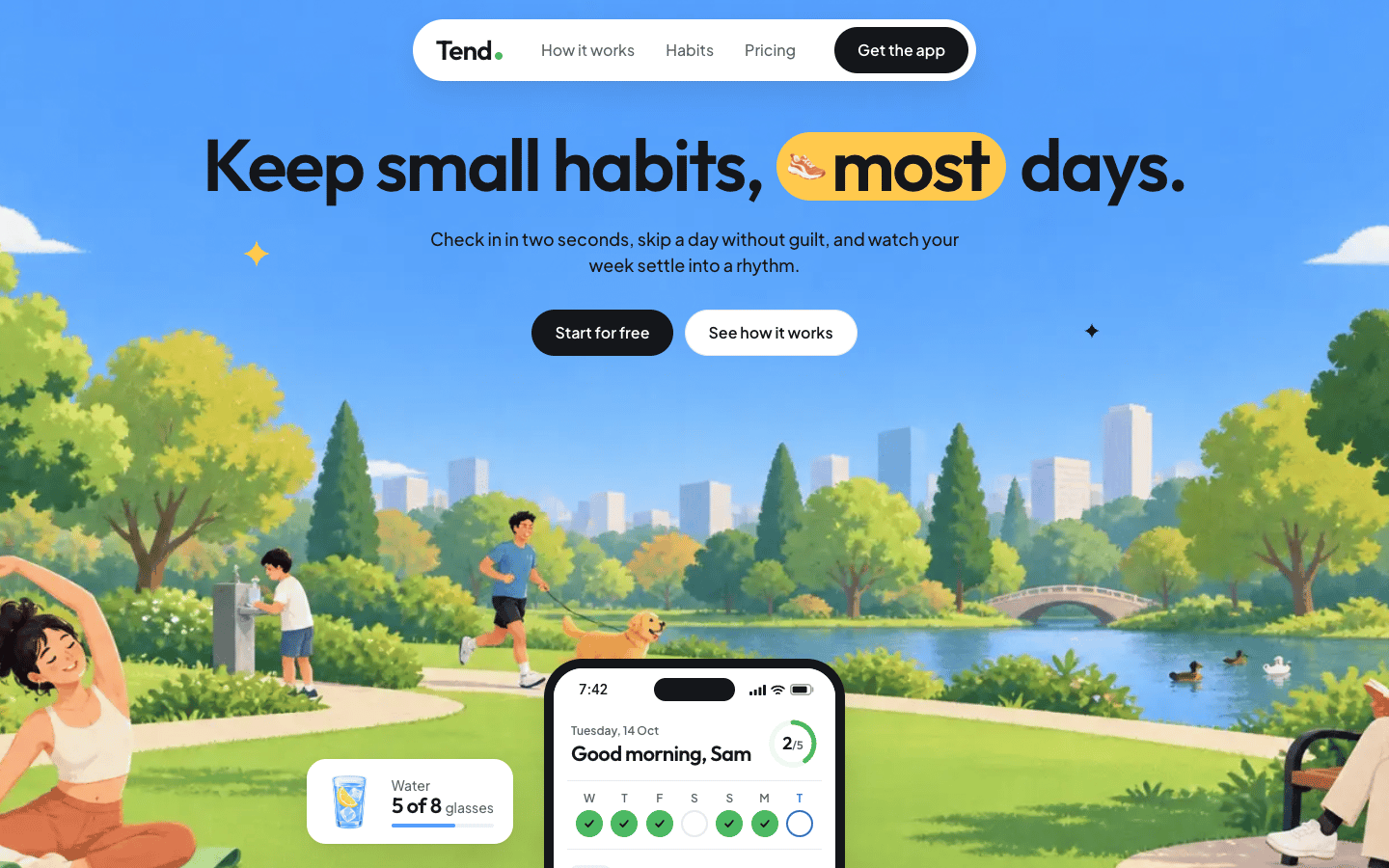
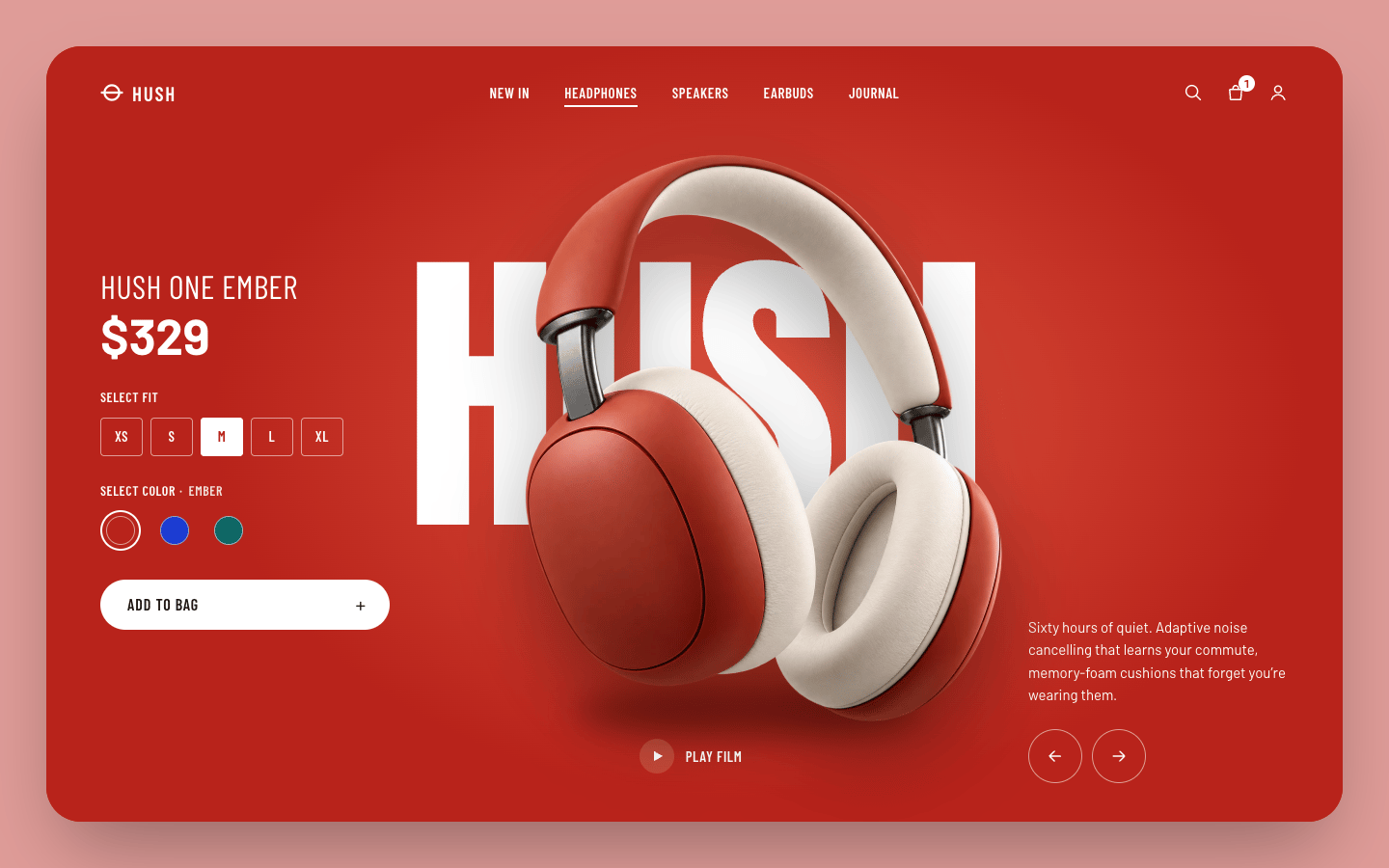
Kaze R scroll story
A dark page you scroll like a car film. The headlights come on first, then the car turns and the specs appear.
Gallery
Prompt: Cinematic scroll story (web), Kaze R Nightfall
Build a scroll-driven product story for the Kaze R Nightfall Edition, a wide-body grand-touring supercar from the invented Japanese marque Kaze ("wind"). The page is a film you scroll: the car emerges from darkness headlights first, then turns angle by angle while short lines of copy explain it, ending in a test-drive invitation.
Follow the style guide style.md (Noir Motion v1) exactly. Treat every token, layout rule, motion rule, and item in its "Never" list as a hard constraint. Use only the images below; never draw the car in code.
Assets
| File | Size | What it shows | Notes |
|---|---|---|---|
assets/car-front.png | 1536×1024 | Straight-on front view, lit | Intro + scene 1 |
assets/car-front-lights.png | 1536×1024, transparent | Only the LED headlights and their floor reflections, pixel-aligned with car-front (left light x 20 to 40%, right light x 60 to 81%, y 40 to 56%; reflections y 74 to 92%) | Intro lights layer |
assets/car-34front.png | 1536×1024 | Front three-quarter, driver's side | Scene 2 |
The full prompt is part of Pro.
You’re seeing the first 12 lines.
Tokens
Noir Motion v1.2void#111112
page and stage background
spot#26262A
center of the spotlight radial (
radial-gradient(ellipse 55% 60% at 50% 45%, spot, void 72%))ink#EDEDEA
headings, captions, nav (16:1)
ink-muted#9A9A9A
body copy, small caps paragraphs, labels (≥ 5.3:1 on void and spot)
signal#FF3B30
the one accent: active nav dot, scroll progress, hover underline, a single word or number (5.3:1 on void)
Style: Noir Motion (v1.2)
Direction
A product film you scroll. A near-black studio with one soft spotlight and a single hero object (a car, a watch, a machine) that turns angle by angle as the visitor scrolls, like a launch keynote. Almost no color: graphite, smoke, and white type, plus one hot red accent that picks up a detail of the product. Nothing moves until it has to, and the motion carries the layout.
Assets (mandatory)
The product images come from assets/: several angles of the same object (identical paint, lighting, and backdrop), plus a lights-only layer derived from the opening angle (never a separately generated dark frame). Optionally a scroll-scrub frame sequence extracted from an orbit video. Never draw the product in code. Code draws the stage, light, type, lines, and UI.
Tokens
Color
| Token | Hex | Use |
|---|---|---|
| void | #111112 | page and stage background |
| spot | #26262A | center of the spotlight radial (radial-gradient(ellipse 55% 60% at 50% 45%, spot, void 72%)) |
| ink | #EDEDEA | headings, captions, nav (16:1) |
| ink-muted | #9A9A9A | body copy, small caps paragraphs, labels (≥ 5.3:1 on void and spot) |
| line | rgba(237,237,234,.22) | rules, outlines, the caption line |
| signal | #FF3B30 | the one accent: active nav dot, scroll progress, hover underline, a single word or number (5.3:1 on void) |
Rules: the spotlight radial is the only gradient. Signal appears at most twice per viewport.
Type
- Display / captions: "Oswald" (Google Fonts). Giant wordmark 600, uppercase,
clamp(96px, 17vw, 300px), letter-spacing 0.01em, ink at 85%. Spec captions 400, 30px/1.25, sentence case. - UI and body: "Sora" 300/400. Nav and labels uppercase 12px, letter-spacing 0.12em. Section titles 400 uppercase 26px/1.2. Body 14px/1.65 in ink-muted, max 380px.
Shape
- Almost no boxes. Buttons are 1px line pills (40px tall, 22px padding, uppercase 12px); hover fills ink with void text.
- Rules: 1px line. The caption line runs full width at the caption's top edge and draws in from left to right.
Layout
- Thin nav over the stage: left links (FEATURES, MODELS), centered model name in Sora 300 with the model letter in 500, right a text link (TEST DRIVE) and an outline pill (BOOK NOW).
- Right rail fixed at the viewport edge: three 18px social icons stacked, then a vertical "SCROLL" label (rotated 90°) above a 14×22px mouse outline whose dot travels down.
- The story is one pinned stage (
position: sticky, 100vh) inside a tall scroll container (≈ 500 to 600vh). Scenes are scroll ranges of that container.
Motion (scroll-driven storytelling)
Easing for scroll-linked values: map progress through smoothstep; for time-based reveals cubic-bezier(0.22, 1, 0.36, 1).
- Intro: lights first, then the car (time-based, on load). Never cross-fade two separately generated images here: they never line up. Use one lit angle plus a lights-only layer derived from it (
pipeline/scripts/derive_glow.py), stacked in the same box so they align by construction:- Layers, bottom to top: spotlight radial → base angle image (
lighten) → a dimmer the color of void at opacity 1 → the lights layer (mix-blend-mode: screen) split into a left and a right half → a bloom copy of the lights layer (filter: blur(14px),screen, opacity 0). - Start only after every stage image has finished
img.decode(); until then show the void and the progress bar. - 0 to 300 ms: pure void.
- 300 ms: LED ignition sweep. Each half reveals its headlight from the inner end to the outer end with an animated
clip-path: inset()over 520 ms,cubic-bezier(0.3, 0, 0.2, 1); the bloom follows 80 ms later, rising to 0.9 and settling to 0.7 over 420 ms. The floor reflections arrive with the bloom. - 820 to 1300 ms: hold (only the lights and their reflections).
- 1300 to 3100 ms: studio lights come up. The dimmer fades 1 → 0 over 1800 ms with
cubic-bezier(0.45, 0, 0.25, 1)(gentle start, long settle); the spotlight radial fades 0 → 1 over 1600 ms starting 200 ms later; the car group scales 1.04 → 1 over 2600 ms with out-quint; over the last 900 ms the lights layer and bloom fall to 0.25 so the LEDs don't look doubled. - 2600 ms: nav and right rail fade in (300 ms, 60 ms stagger). Scrolling during the intro jumps every animation to its end state.
- Run it with the Web Animations API; animate only opacity, transform, and the clip-path of the two small light halves; set
will-changeon those layers during the intro and remove it after.
- Layers, bottom to top: spotlight radial → base angle image (
- Frame edges: hide each image's frame with a per-image mask (a radial for the body plus linear fades for the top haze, the floor horizon, and the side edges) so no nose, wing, or floor edge is clipped.
- Scenes (scroll-linked): each scene owns a range of the scroll container. Within its range, its angle image is at full opacity and drifts slightly (translateX ±4vw, scale 1 → 1.05) while its copy enters. Between scenes, the outgoing angle cross-fades to the incoming one over ~6% of the scroll while both slide 3vw in the direction the car would rotate and pick up
filter: blur(2px)at the midpoint. This reads as rotation. The incoming angle starts fading in slightly after the outgoing one, so the midpoint dips darker instead of showing a double exposure. - Frame sequence (if the item provides one): draw the frames to a
<canvas>and map scroll progress to frame index instead of the cross-fades; preload progressively (keyframes first). - Giant wordmark scene: the wordmark rises 8vh and fades from 0 to 85% behind the side-profile angle; the product sits in front, overlapping the lower half of the letters.
lightenblending alone lets the letters show through the car: occlude them with a mask built from the product's silhouette (a transparent cutout of that angle, or a luminance mask computed once from the image and embedded as a data URI). - Spec captions: the last scene cycles 3 to 4 captions by scroll sub-range: the line draws in (scaleX 0 → 1, origin left), the caption fades up 16px; the previous caption fades out upward.
- Scroll indicator: the mouse dot loops downward every 1.6s; a 2px signal progress bar at the very top fills with story progress.
- Reduced motion: no intro sequence (start at the lit front with the lights layer at 0.25), scenes switch by plain cross-fade at their thresholds, no blur, no parallax drift, captions all visible as a list in the last scene.
Implementation: one
requestAnimationFrameloop readingscrollY; transforms, opacity, and filter only; no scroll-jacking (native scrolling stays); everything above the fold visible within 1s once the intro has finished or been skipped.
Copy voice
Engineering-proud, calm, few words. Uppercase section titles, sentence-case spec lines with one number each.
Never
- Real car, watch, or brand names, logos, grilles, or badges (no kidney grilles, no look-alike emblems); invented models only
- Colorful backgrounds, more than one accent color, neon glows, lens-flare effects, glassmorphism
- Inter, Roboto, Arial, or system fonts as the visible font
- Scroll-jacking (taking over the wheel), autoplaying sound
- Text over the brightest part of the spotlight below 4.5:1; body text in pure white
- Product angles that disagree on paint, wheels, or lighting
- Phrases like "unleash", "beast", "next level", "redefine"
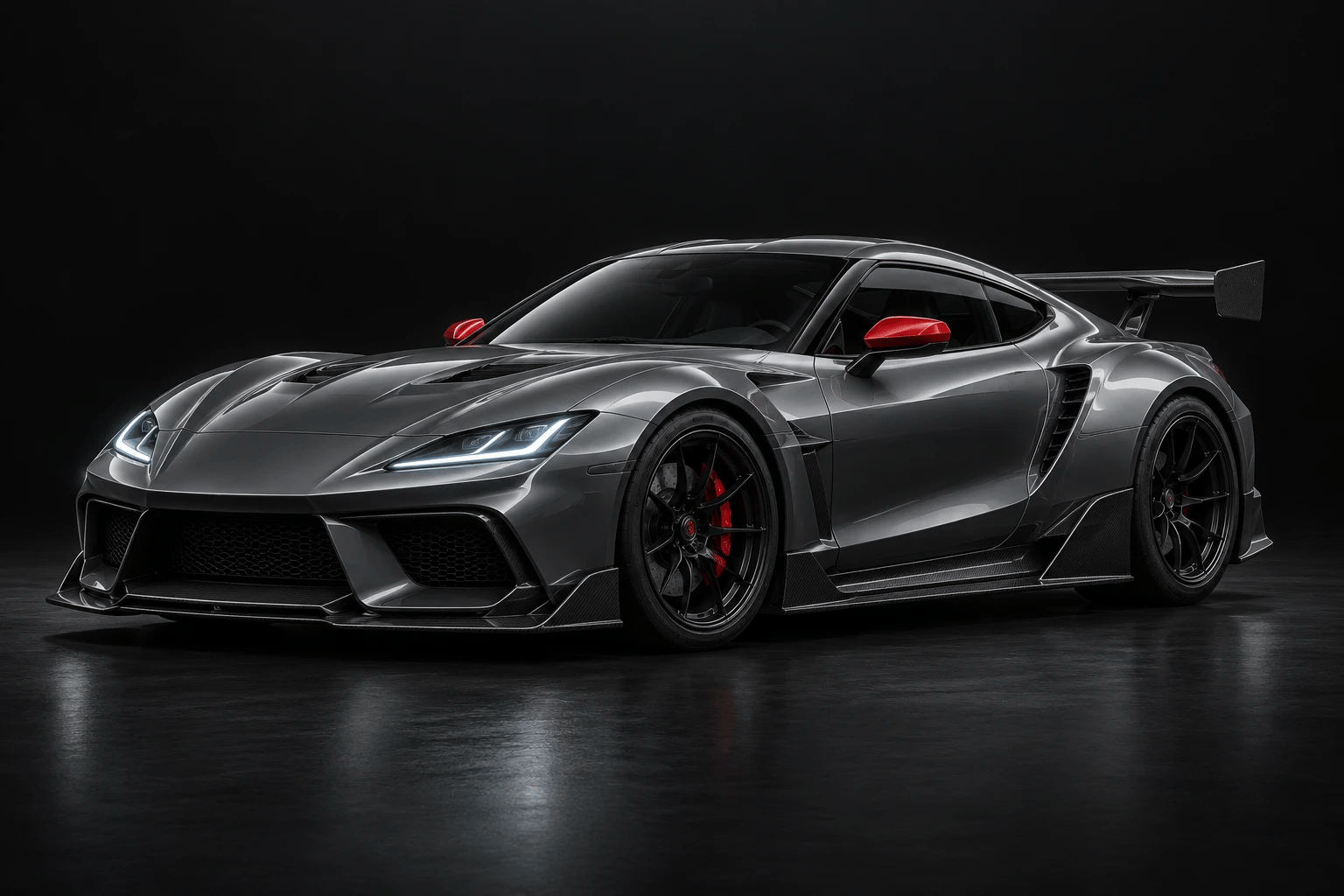 car-34front.png914 KB
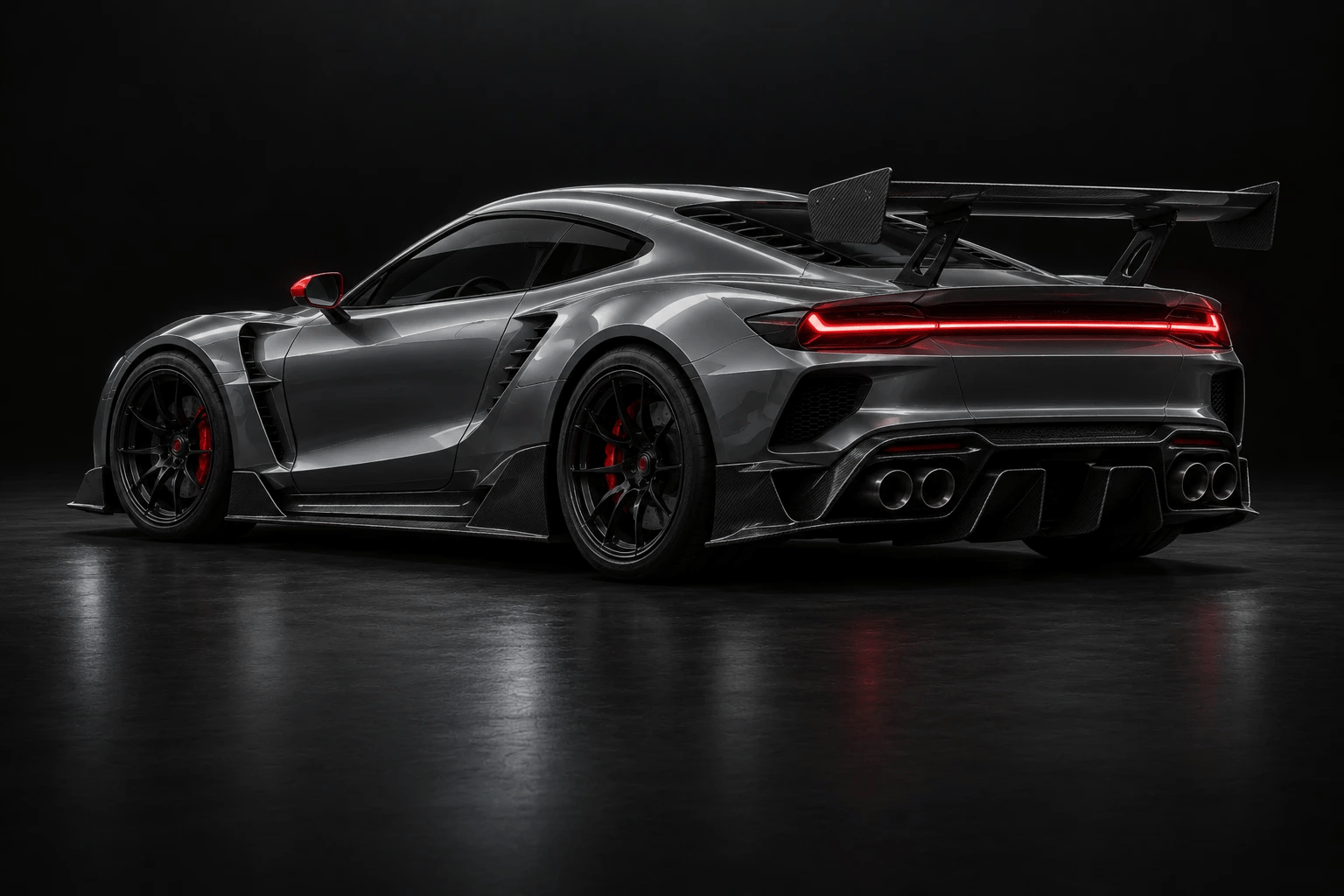 car-34rear.png886 KB
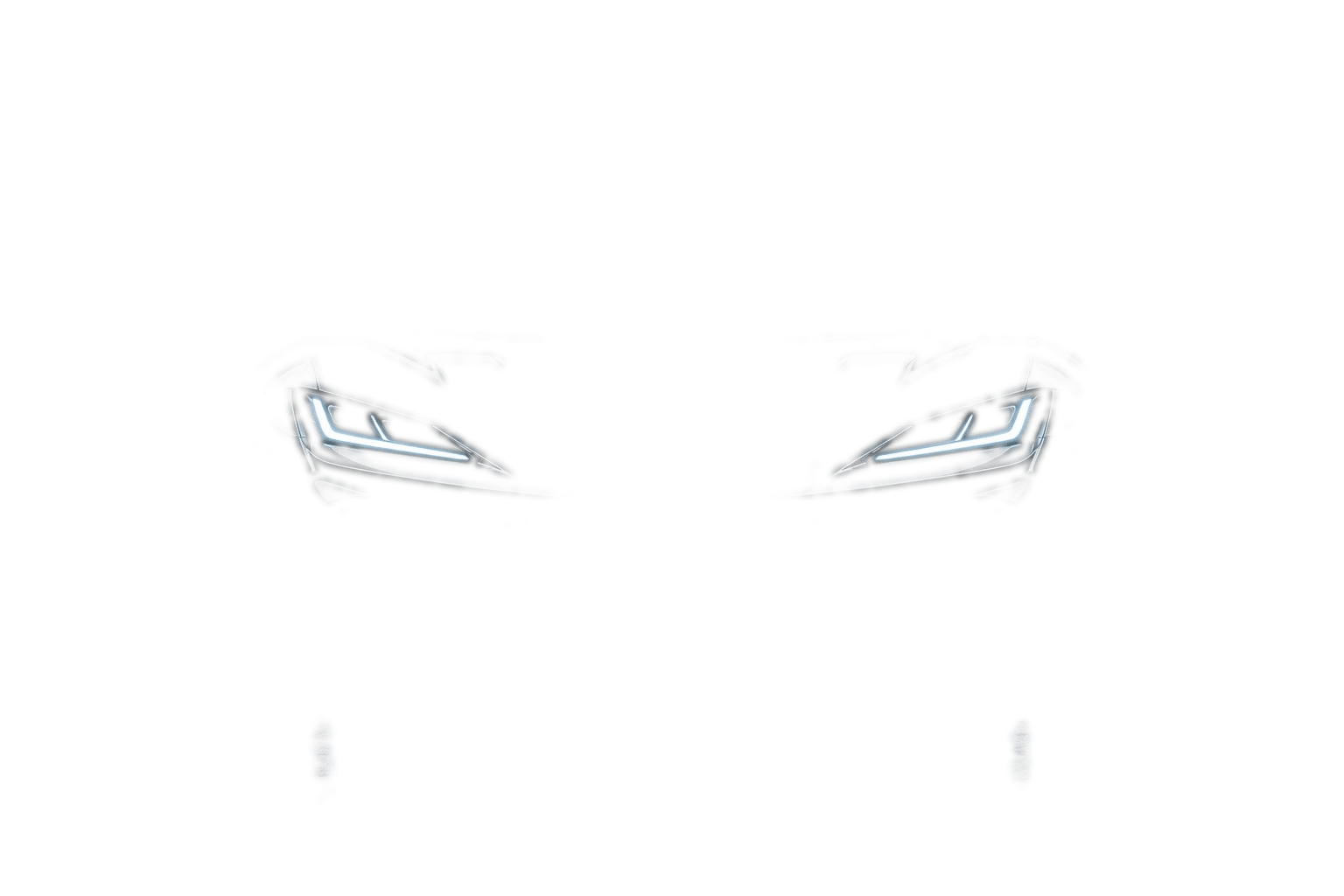 car-front-lights.png694 KB
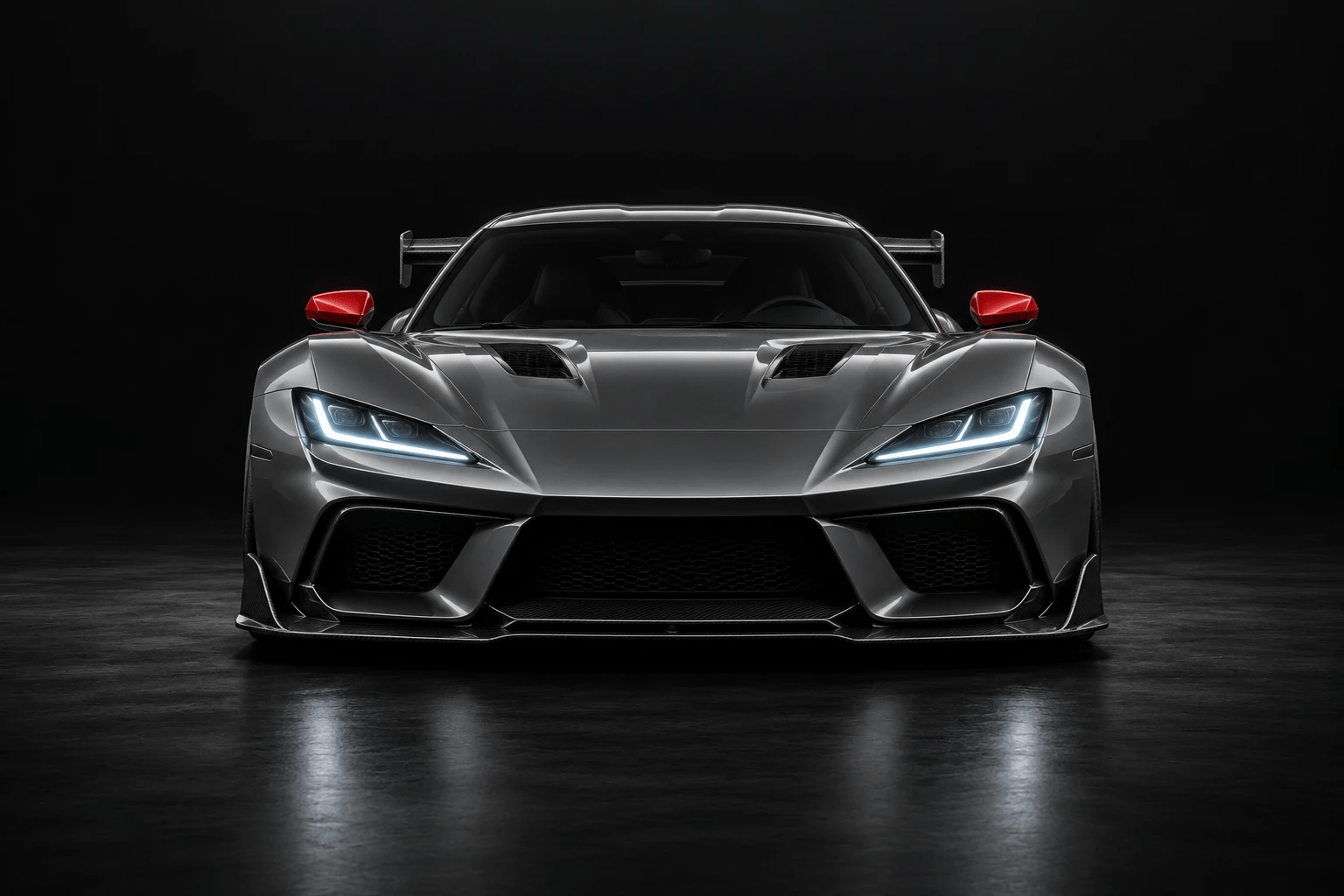 car-front.png748 KB
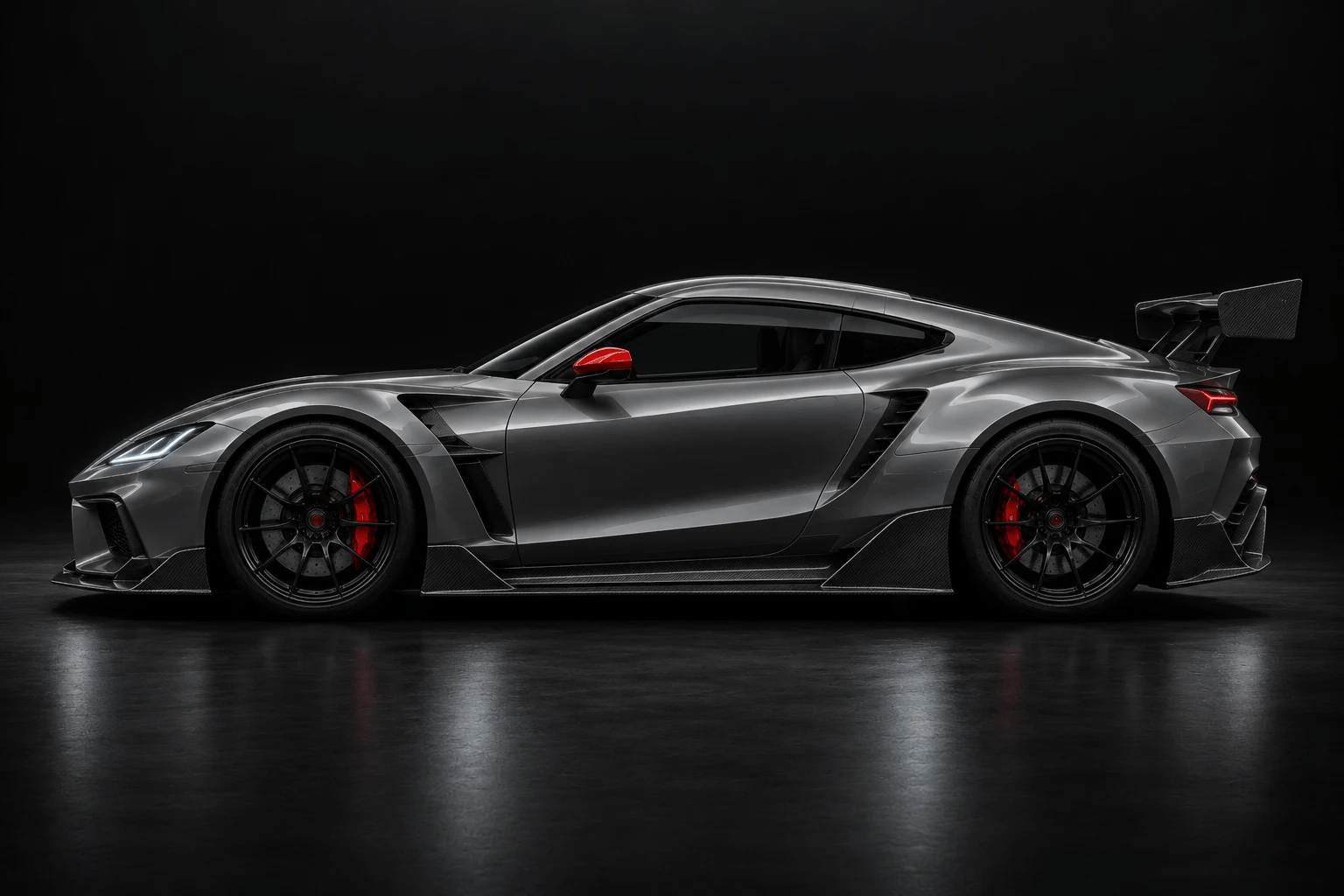 car-side.png802 KB
Image prompts
The prompts we used to make these images. Use them to make your own versions.
{
  "styleAnchor": "Cinematic studio product photography in a near-black void. One soft rectangular spotlight overhead, a faint rim light tracing the silhouette, deep shadows, glossy reflections on paint and glass, a barely visible dark reflective floor that fades into black within a short distance. The backdrop is a seamless charcoal-black (#111112) that reaches every edge of the frame. Monochrome palette (graphite, gunmetal, smoke) with small red accents only where the prompt asks. Ultra-sharp, photorealistic, premium automotive-advert quality. No text, no logos, no badges, no license plates, no people.",
  "images": [
    {
      "name": "car-34front",
      "size": "1536x1024",
      "background": "opaque",
      "prompt": "Image 1. Front three-quarter view from the driver's side of a wide-body Japanese grand-touring supercar of an original, invented design: long sculpted hood, low fastback roof, sharp slim LED headlights, wide flared fenders, a large carbon rear wing, black multi-spoke wheels, gunmetal gray paint, red side mirrors and red brake calipers, no badges, no logos, no license plates. The car is centered and fills about 75% of the frame width, headlights on with a cool white glow.",
      "emptyZones": "Leave generous empty black space above the roof and on the left and right edges; the car sits in the middle 75% of the frame."
    },
    {
      "name": "car-front",
      "size": "1536x1024",
      "background": "opaque",
      "prompt": "Edit image 1: keep the exact same car, paint, wheels, lighting, and studio. Rotate the camera to a straight-on front view at headlight height, car centered and the same size in frame, headlights on.",
      "emptyZones": "Wide empty black space on both sides and above the roof."
    },
    {
      "name": "car-side",
      "size": "1536x1024",
      "background": "opaque",
      "prompt": "Edit image 1: keep the exact same car, paint, wheels, lighting, and studio. Rotate the camera to a clean side profile from the left, car facing left, centered, the same size in frame.",
      "emptyZones": "The top 35% of the frame is empty black so a giant word can sit behind the roofline."
    },
    {
      "name": "car-34rear",
      "size": "1536x1024",
      "background": "opaque",
      "prompt": "Edit image 1: keep the exact same car, paint, wheels, lighting, and studio. Rotate the camera to a rear three-quarter view from the passenger side, showing the rear wing, the slim full-width tail light glowing red, and a carbon diffuser with quad exhaust tips.",
      "emptyZones": "The bottom 30% of the frame below the car is empty black for captions."
    }
  ],
  "derived": [
    {
      "name": "car-front-lights",
      "what": "Transparent layer with only the LED headlights and their floor reflections, pixel-aligned with car-front",
      "command": "python3 pipeline/scripts/derive_glow.py items/kaze-r-supercar/site/assets/car-front.png items/kaze-r-supercar/site/assets/car-front-lights.png --min 200 --soft 30 --cool 4 --regions \"0.20,0.40,0.40,0.56;0.60,0.40,0.81,0.56;0.19,0.74,0.31,0.92;0.69,0.74,0.81,0.92\" --feather 18"
    }
  ]
}